Emotional abuse rarely announces itself as cruelty. More often, it hides behind charm, concern, humor, or “love,” making it difficult to recognize—especially when you care deeply about the person causing harm, because there are no visible bruises, survivors are often left questioning whether what they’re experiencing is “bad enough” to count as abuse at all.
This post is about bringing visibility to what’s often invisible. Emotional abuse distorts your reality, alters your self-perception, and quietly dismantles your sense of safety. Naming it is not about labeling someone as “bad”—it’s about protecting your emotional well-being and beginning the process of healing with clarity.
What Emotional Abuse Really Looks Like
Emotional abuse is not defined by one argument, one harsh word, or one difficult season. It is defined by a repetitive pattern of control, invalidation, and emotional power over another person. Unlike healthy conflict, emotional abuse leaves you feeling smaller, more confused, and less confident over time—not stronger or more understood.
Emotional Manipulation Defined
Emotional manipulation occurs when someone intentionally uses fear, guilt, obligation, shame, or confusion to influence your behavior or emotional state. Instead of mutual communication, they distort situations to protect their power or avoid accountability. Over time, you may begin to second-guess your instincts and feel uncertain about what’s real.
The Difference Between Toxic Patterns and Normal Disagreement
Healthy disagreement allows space for both voices to exist, even when emotions run high. Emotional abuse, however, creates a power imbalance where one person’s feelings dominate and the other person’s needs are dismissed. Conflict becomes unsafe when it leads to fear, self-silencing, or emotional punishment instead of resolution.
Common Signs of Emotional Abuse
Some signs of emotional abuse are easier to recognize because they show up directly in communication and behavior. Even so, they are often dismissed as “normal relationship conflict,” personality differences, or stress reactions. The truth is, when these behaviors become patterns, they create emotional instability, fear, and self-doubt that are not part of healthy connection.
1. Gaslighting
Gaslighting is a form of psychological manipulation that causes you to question your memory, perception, and emotional responses. It often sounds subtle at first—small corrections, denials, or shifts in responsibility—but over time it trains you to look outside yourself for truth instead of trusting your own experience. Survivors often describe feeling disoriented, confused, and unsure of what actually happened after repeated gaslighting.
2. Belittling Statements
Belittling shows up through dismissive language, sarcastic tone, or repeated comparisons that make you feel inferior. It may be laughed off as humor or framed as “just being real,” but the impact is steady erosion of your confidence. Over time, you may stop sharing your thoughts or goals because you’ve learned they won’t be taken seriously.
3. The Silent Treatment
The silent treatment is not about cooling off—it’s about control. By withdrawing communication, the abuser creates emotional anxiety and forces you into a state of waiting, wondering, and self-blame. The lack of resolution keeps you emotionally unstable and shifts all responsibility for repairing the relationship onto you.
4. Emotional Withholding
Emotional withholding happens when affection, reassurance, or availability is only offered when you behave in a way that pleases the other person. Love becomes something earned instead of given. This creates a constant cycle of chasing connection and fearing emotional abandonment, even when you’ve done nothing wrong.
5. Constant Criticism Disguised as “Help”
Some emotional abuse hides behind advice. You may be told everything you do could be done better, differently, or “the right way.” While framed as concern, the underlying message is that who you are is never enough. Over time, this breeds insecurity and deep self-questioning.
6. Guilt Manipulation
You may be made to feel selfish for setting boundaries or prioritizing your needs. Statements like “After everything I do for you…” or “If you really cared, you would…” place emotional responsibility on you for their happiness. This creates chronic guilt that keeps you emotionally trapped.
7. Emotional Intimidation
This includes sighs, eye-rolling, sudden mood shifts, harsh tone, or unspoken threats of withdrawal. You may not be yelled at directly, but the environment feels charged with the possibility of conflict. Fear becomes the silent rule that controls your behavior.
8. Boundary Violations
Your limits are repeatedly ignored, tested, or mocked. Whether it’s your time, your body, your emotions, or your privacy, boundaries are treated as inconveniences rather than respected needs. Eventually, you may stop setting boundaries altogether to avoid emotional retaliation.
Subtle Signs Survivors Often Overlook
Not all emotional abuse is obvious or explosive. Much of it quietly reshapes your behavior, your thought patterns, and your emotional responses until dysfunction starts to feel “normal.” These subtle signs are often internalized and mislabeled as personality flaws, emotional sensitivity, or insecurity—when in reality, they are common trauma responses.
9. You Over-Apologize for Everything
You apologize for expressing feelings, setting boundaries, taking up space, or even existing in a shared emotional environment. The word “sorry” becomes your emotional punctuation, filling every gap where you once had confidence. Over time, this constant self-erasure may feel polite—but it is actually a signal that your nervous system learned to stay small to stay safe.
10. You Feel Confused or “Crazy”
You replay conversations in your mind over and over, searching for the moment where you “messed up” or misunderstood. This chronic confusion often comes from being consistently invalidated while being told the opposite is true. The longer it continues, the harder it becomes to trust your memory, emotions, and perspective.
11. You Walk on Emotional Eggshells
Every word feels calculated. Every reaction is pre-screened in your mind to avoid potential emotional fallout. You may feel like safety depends on guessing the right mood, tone, or moment—until emotional exhaustion becomes your baseline.
12. You Feel Responsible for Their Emotions
When they are upset, distant, cold, or angry, you instinctively assume it’s your fault—even when no clear reason exists. You may overextend yourself trying to restore emotional balance in the relationship, placing their comfort above your own emotional needs.
13. You Minimize Your Own Pain
You tell yourself it “wasn’t that bad,” that others have it worse, or that you’re just being dramatic. This minimization keeps you stuck in cycles of self-doubt and delays your healing because your pain keeps getting dismissed—even by you.
14. You Feel Emotionally Disconnected From Yourself
After prolonged emotional suppression, you may struggle to identify what you truly feel or want. Emotions may feel muted, confusing, or unsafe to explore, leaving you disconnected from your inner world.
15. You Fear Being “Too Much” or “Not Enough”
You shrink yourself to avoid burdening others with your needs, while also feeling internally insufficient. This contradiction is common after emotional abuse—no matter what you do, it never feels like the right amount.
The Psychological Effects of Emotional Abuse
Emotional abuse doesn’t end when the relationship ends—it often continues inside the body and mind long afterward. The nervous system adapts to chronic emotional harm in ways meant to survive, not thrive. Over time, these internal shifts can shape how you think, feel, attach, and even how safe the world feels to you.
16. Chronic Anxiety
Your body may remain in a constant state of alertness, always scanning for emotional danger. Even during peaceful moments, your nervous system may struggle to relax because hypervigilance has become its default. You might feel restless, tense, or uneasy without knowing exactly why.
17. Self-Doubt
Prolonged emotional invalidation slowly erodes trust in your own thoughts, choices, and reactions. You may find yourself second-guessing even simple decisions or seeking reassurance from others before trusting yourself. Over time, your internal voice becomes quieter than the one that once controlled you.
18. Shame and Guilt
Emotional abuse teaches you to carry responsibility that was never yours. You may feel guilty for being hurt, unsure why you can’t “just move on,” or ashamed for staying as long as you did. This shame often keeps survivors silent, even long after they are safe.
19. Trauma Bonding
Trauma bonding forms when cycles of emotional pain are intermittently interrupted by affection, apologies, or moments of closeness. The nervous system becomes attached not to safety—but to emotional intensity. Even when the relationship is harmful, leaving can feel physically distressing, confusing, and overwhelming.
20. Emotional Numbness
Some survivors stop feeling deeply at all—not because the pain is gone, but because the emotional system has shut down to survive. Joy, excitement, and connection may feel distant or muted after prolonged emotional harm.
21. Difficulty Trusting Others
After repeated emotional betrayal, trusting new people can feel unsafe—even when they show consistency. You may anticipate abandonment, manipulation, or disappointment before it ever occurs.
22. Identity Confusion
When your emotions, needs, and reality have been repeatedly dismissed, you may lose a clear sense of who you are. Survivors often describe feeling disconnected from their preferences, desires, and personal direction after emotional abuse.
When Recognizing Emotional Abuse Means It’s Time to Act
Awareness changes everything—but awareness also comes with grief. Once you recognize emotional abuse clearly, it becomes impossible to unsee. And sometimes, that clarity calls for difficult decisions.
When Distance Is Necessary
Distance becomes essential when emotional safety is consistently compromised. If communication repeatedly results in confusion, fear, or emotional injury, space is no longer avoidance—it becomes protection.
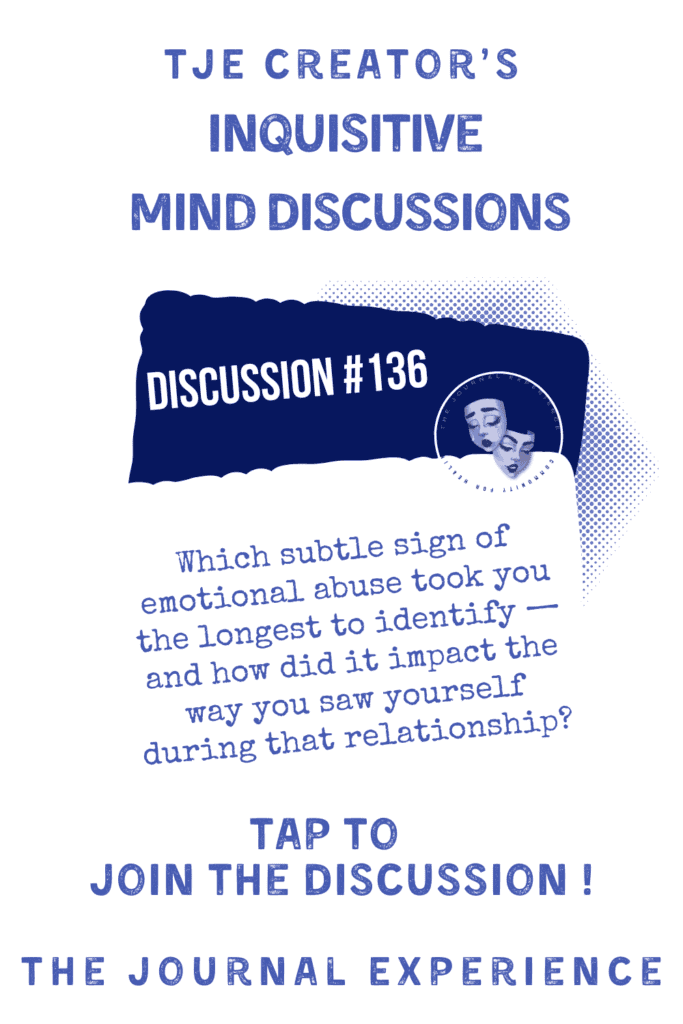
When It’s More Than “Just a Rough Patch”
Every relationship faces challenges, but growth requires accountability and repair. If harmful patterns repeat without change, acknowledgment, or effort from the other person, it is no longer a temporary struggle.
How to Seek Emotional Support Safely
Healing requires safe validation. Support can come through trusted relationships, trauma-informed therapy, support circles, or personal practices that help you process your emotions without minimizing your experiences.
Overview
If this post reflected your experience, know this: emotional abuse is real, damaging, and never something you’re meant to excuse or minimize. What you felt mattered, and what you endured deserves acknowledgment and care. Recognition is not the end of the story—it’s the beginning of your healing.
If you’re ready to keep unpacking your story with honesty and support, explore The Journal Experience’s community designed to help you reconnect with your voice, rebuild emotional clarity, and strengthen your boundaries. Your healing is not rushed—and you don’t have to do it alone.