Emotional awareness is often one of the first things to disappear in manipulative or emotionally unsafe relationships. When your feelings are repeatedly questioned, minimized, reframed, or subtly blamed on you, it becomes difficult to tell what you actually feel versus what you’ve been conditioned to accept. Over time, this erosion creates confusion, emotional exhaustion, self-doubt, and a growing sense of disconnection from yourself.
Journaling offers a way to slow everything down. It creates space between your emotions and the narratives placed on them by others. These 35 journal prompts for emotional awareness and self-protection are designed to help you understand how manipulation impacts your emotional world, identify manipulative behaviors with greater clarity, and rebuild emotional intelligence and self-awareness. This post is specifically about using journaling to recognize manipulation, reconnect with your intuition, and strengthen self-trust so you can protect yourself emotionally as you move forward.
Why Emotional Awareness Matters in Toxic Relationships
Emotions are internal signals. They alert you to safety, danger, connection, and boundaries. In emotionally healthy relationships, emotions are acknowledged—even when they’re uncomfortable. In toxic or manipulative relationships, emotions are often dismissed, reframed, or used against you.
When emotional awareness weakens, self-doubt takes its place. You may begin questioning whether your reactions are valid, whether your needs are reasonable, or whether you’re “reading too much into things.” Journaling helps reverse this process by returning attention to your internal experience.
Suppressed emotions vs. ignored intuition
Suppressed emotions happen when you consciously push feelings down to avoid conflict, abandonment, or emotional backlash. Ignored intuition happens when your body senses something is off, but you no longer trust those signals. Manipulation thrives when both are present.
Over time, you may feel anxiety without understanding why, or guilt without a clear cause. Writing allows these signals to surface gently instead of remaining trapped internally.
How manipulation disconnects you from your feelings
Manipulation doesn’t always look dramatic. It often shows up as gaslighting, guilt-tripping, blame shifting, emotional minimization, or selective accountability. These behaviors slowly teach you to doubt your emotional responses.
Journaling helps create separation between your authentic emotions and the narratives imposed on them. It gives you a record of your inner experience—untainted by outside interpretation.
How Journaling Helps You Recognize Manipulation
Journaling is not about confronting someone or reaching immediate conclusions. It’s about observation without pressure.
When you write consistently, emotions become clearer. Patterns emerge. What once felt confusing begins to feel recognizable.
Journaling also removes urgency. Instead of reacting emotionally or mentally replaying interactions, you create space to process what actually happened and how it affected you.
Most importantly, journaling helps rebuild self-trust. Each time you name a feeling honestly, you reinforce the belief that your internal experience matters.
How to Use These Journal Prompts Safely
Before beginning, emotional safety matters more than insight or productivity.
Choose a quiet environment where you feel physically safe. Set a gentle time limit so journaling doesn’t become overwhelming. Remind yourself that you can stop at any point—nothing needs to be finished.
If emotions rise quickly, pause. Ground yourself. Write in short phrases instead of full paragraphs, or close the journal entirely. Healing does not require pushing through distress.
Journal Prompts for Emotional Awareness
(Emotions, bodily responses, intuition)
This section focuses on reconnecting with what you feel, how emotions live in your body, and what your intuition has been signaling. These prompts are about noticing—not fixing.
Emotional awareness prompts
- What emotions have been showing up most often for me lately?
- Which emotions do I tend to judge, dismiss, or downplay?
- What feeling do I avoid acknowledging because it feels uncomfortable?
- What emotions feel safest for me to express?
- Which emotions feel risky or unsafe to share?
Body-based awareness prompts
- Where do I feel tension in my body after certain interactions?
- What physical sensations show up when I feel uneasy or unsafe?
- How does my body respond when I feel dismissed or unheard?
- What does emotional overwhelm feel like physically?
- What does calm feel like in my body?
Intuition and internal signals
- When was the last time I ignored a gut feeling?
- What patterns does my intuition keep trying to show me?
- How does my intuition communicate—quietly or urgently?
- What emotions tend to show up right before I doubt myself?
- What happens when I listen to my instincts instead of questioning them?
Journal Prompts for Recognizing Manipulative Behaviors
(Gaslighting, guilt-tripping, control)
These prompts help you observe emotional dynamics without assigning blame. The goal is clarity and understanding, not confrontation.
Emotional confusion prompts
- What conversations leave me feeling confused afterward?
- When do I leave interactions questioning my own reactions?
- What explanations have I accepted that didn’t fully feel true?
- When have my feelings been reframed or minimized?
- What moments made me feel like I needed to defend my emotions?
Responsibility-shifting prompts
- When do I feel responsible for someone else’s emotions?
- What am I often blamed for in relationships?
- How do others respond when I express discomfort?
- When have my boundaries been labeled as unreasonable?
- What emotions am I encouraged to suppress for someone else’s comfort?
Control and power dynamics
- When do I feel pressure to explain, justify, or over-clarify?
- What behaviors cause me to shrink or self-silence?
- Who benefits when I doubt my perception?
- What patterns repeat after I speak honestly?
- What emotions show up when I consider speaking up again?
Journal Prompts for Strengthening Self-Protection
(Boundaries, validation, grounding)
Self-protection is not emotional avoidance—it’s emotional clarity. These prompts focus on strengthening boundaries and reinforcing self-trust.
Emotional boundary prompts
- What emotional boundaries do I need right now?
- Where am I over-explaining instead of trusting myself?
- What emotions deserve more protection and care?
- What situations require emotional distance for my well-being?
Self-validation and grounding
- What does emotional self-protection look like for me in this season?
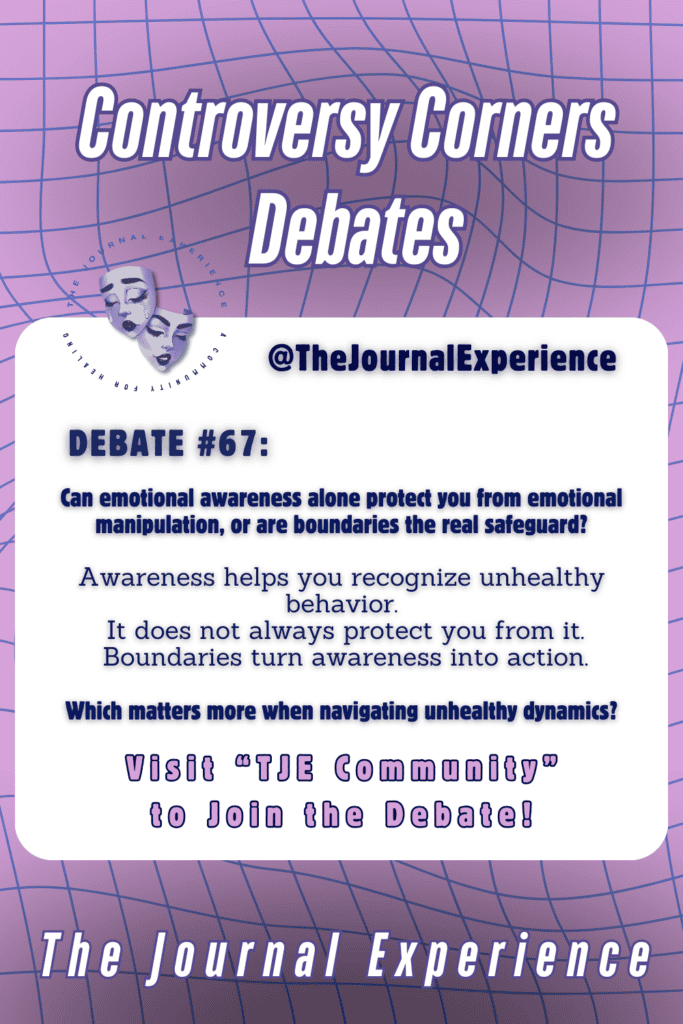
What to Expect After Writing These Prompts
Emotional awareness doesn’t usually arrive as a sudden realization. More often, it shows up as subtle shifts in how you respond to situations, people, and your own thoughts.
After working through these prompts, you may notice:
- Less urgency to explain or justify your feelings
- Clearer emotional reactions instead of confusion
- Increased discomfort around behaviors you once tolerated
This is not regression. It’s clarity.
It’s common for awareness to feel uncomfortable at first because it disrupts familiar patterns. That discomfort is often a sign that your emotional system is recalibrating.
Signs Your Emotional Awareness Is Strengthening
You don’t need dramatic breakthroughs to know this work is helping. Progress often looks quiet and internal.
You may be developing stronger emotional awareness if:
- You recognize emotional shifts sooner
- You trust your reactions without immediate self-doubt
- You feel less pulled into emotional explanations
- You notice patterns without needing external validation
These changes indicate growing emotional intelligence and self-trust—two things manipulation actively tries to weaken.
Common Mistakes to Avoid While Journaling for Self-Protection
Journaling is powerful, but certain habits can unintentionally recreate emotional pressure.
Avoid these common pitfalls:
- Forcing conclusions before you’re ready
- Using journaling to justify someone else’s behavior
- Re-reading entries to self-criticize
- Treating awareness as a requirement to confront
Your journal is not a courtroom.
It’s a witness.
You don’t need to prove anything to yourself. Observation is enough.
How Often Should You Journal for Emotional Awareness?
Consistency matters more than frequency.
Some people benefit from daily short entries. Others find weekly reflection more sustainable. There is no correct schedule—only what supports emotional regulation rather than overwhelm.
A helpful guideline:
- Journal when confusion is present
- Journal after emotionally charged interactions
- Journal when your body signals unease
Let journaling be responsive, not rigid.
What to Do If Journaling Brings Up Grief or Anger
Emotional awareness often unlocks emotions that were previously suppressed for survival. Grief and anger are common responses when clarity returns.
If strong emotions surface:
- Pause instead of pushing through
- Ground yourself physically
- Remind yourself that emotion does not require action
Feeling anger does not mean confrontation is required.
Feeling grief does not mean something is wrong.
Both are signs that emotional truth is returning.
When Emotional Awareness Signals the Need for Distance
One of the hardest realizations journaling can bring is recognizing when a relationship or dynamic is emotionally unsafe.
Awareness may reveal:
- Repeated emotional confusion
- Chronic self-doubt after interactions
- Emotional exhaustion without resolution
Self-protection sometimes means emotional distance—not explanations, ultimatums, or closure conversations. Distance is a valid boundary.
How Emotional Awareness Supports Long-Term Self-Protection
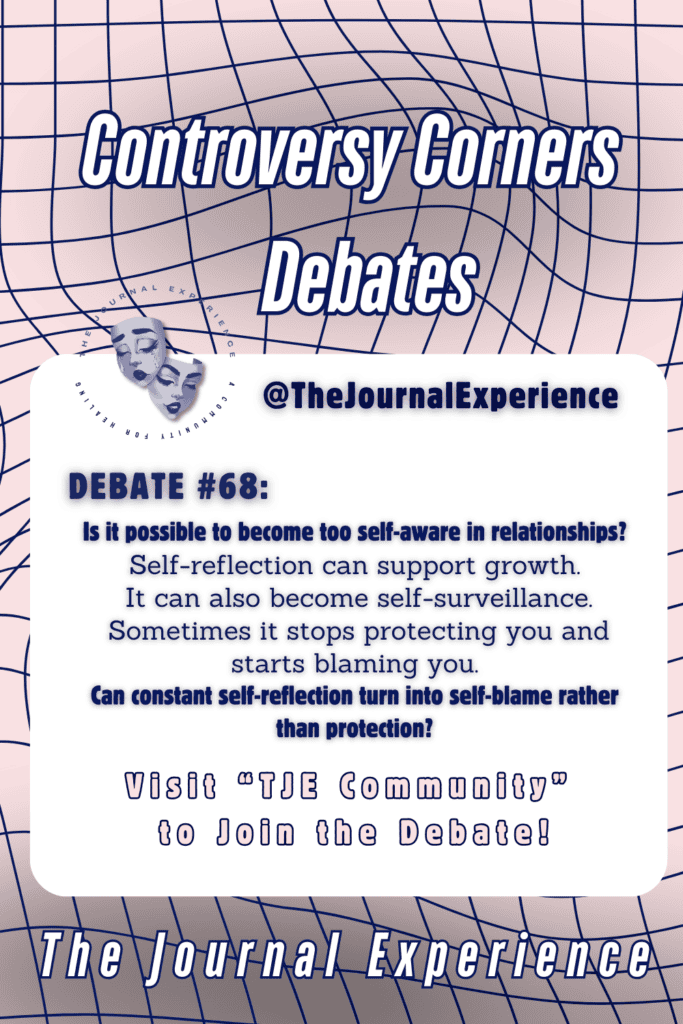
Emotional awareness is not about becoming hypervigilant. It’s about becoming grounded.
When you understand your emotional patterns:
- You recognize manipulation sooner
- You stop internalizing emotional responsibility
- You trust yourself without external confirmation
Self-protection becomes internal rather than reactive.
Overview
These journal prompts for understanding manipulation are designed to help you reconnect with your emotional reality, recognize manipulative behaviors with clarity, and rebuild emotional self-awareness at a sustainable pace. Emotional awareness is not about confrontation or self-blame—it’s about internal alignment, safety, and trust.
You don’t need to journal perfectly. You don’t need immediate answers. Emotional clarity builds slowly when you give yourself permission to listen without judgment.