Trust issues don’t just appear out of nowhere. They form through betrayal that rewritten your sense of safety, inconsistency that kept you guessing, and emotional neglect that taught you your needs might be “too much.” When your nervous system no longer feels safe in connection, trusting others—and even trusting yourself—can feel terrifying.
This post is all about how journaling helps you rebuild internal safety and emotional clarity when trust feels broken. You’ll explore where your trust issues come from, how they show up in your present relationships, and you’ll receive 25 deeply intentional journal prompts for trust issues to help you process fear, reconnect with yourself, rebuild emotional safety, and redefine trust on your own terms.
Understanding Where Your Trust Issues Come From
Trust issues are rarely created by one single experience. They form gradually through emotional conditioning, broken attachment, and repeated moments where your nervous system learned that connection equals uncertainty.
Childhood
If you grew up being emotionally dismissed, blamed for your feelings, or forced to grow up too fast, your system may have learned that vulnerability equals danger. When safety was conditional, trust became shaky. Over time, this teaches you to anticipate emotional abandonment even when none is happening, creating hyper-independence or people-pleasing as survival strategies.
Past Heartbreak and Trauma
Being cheated on, abandoned, gaslit, or emotionally manipulated doesn’t just hurt—it rewires how your brain anticipates risk. Trauma teaches you to expect the worst in order to survive it. Even when you logically know not every person will hurt you, your body may still brace for impact based on what it’s already endured.
Confusion Between Fear and Intuition
When you’ve been betrayed repeatedly, fear can start pretending to be intuition. You may believe you’re being “realistic” when you’re actually operating from trauma protection. This confusion can make it difficult to trust healthy connections because your nervous system no longer distinguishes between genuine danger and emotional unfamiliarity.
Journal Prompts for Self-Awareness
These prompts help you connect your past experiences to your present trust responses.
- When did I first realize I struggle with trust?
- What patterns do I see in the people I’ve trusted or distrusted?
- How did my caregivers model trust when I was growing up?
- What did I learn about vulnerability in childhood?
- What moments in my past made me feel emotionally unsafe?
- How do I usually respond when I feel let down?
- What does “feeling safe” emotionally actually mean to me?
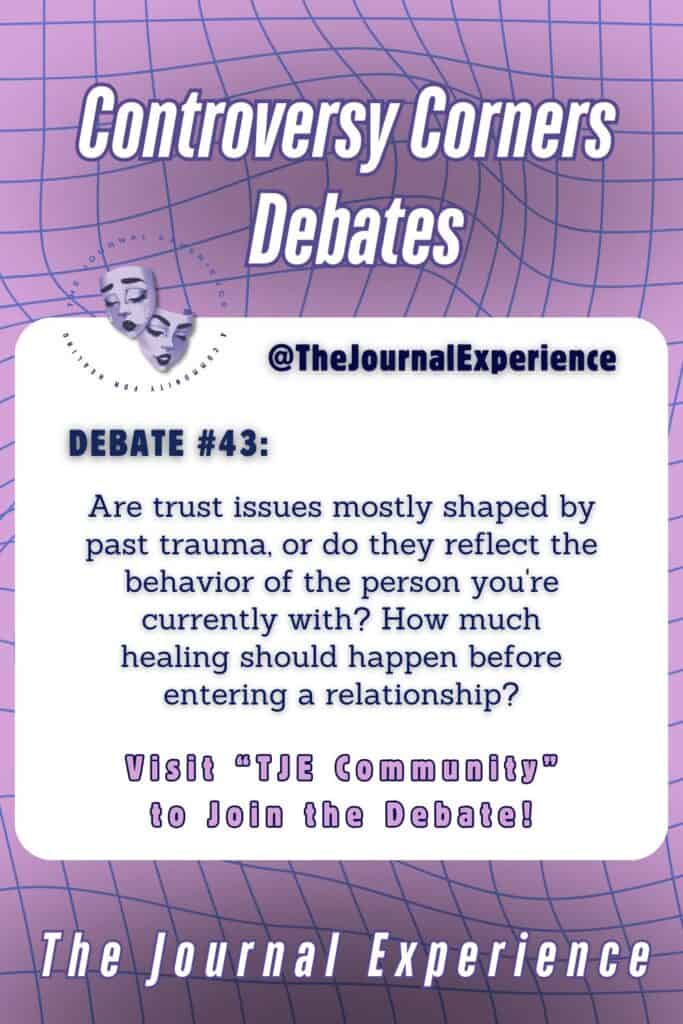
How Trust Issues Affect Your Current Relationships
Even when you deeply desire healthy love and connection, unresolved trust issues can quietly shape your behavior in ways that create distance, confusion, and emotional exhaustion. You may not always recognize these patterns as mistrust at first—they often feel like “being cautious,” “being realistic,” or “protecting your peace.” But over time, these defenses can slowly interfere with the very connections you want to feel safe inside of.
Emotional Walls
You may crave intimacy yet feel yourself emotionally shut down the moment someone gets too close. Even when connection feels good, your nervous system may stay braced for impact, waiting for the moment it falls apart. This can result in pulling away suddenly, avoiding vulnerability, or keeping parts of yourself hidden to prevent potential rejection or abandonment. Over time, these walls don’t just block pain—they block the full depth of connection you deserve to experience.
Overthinking Everything
Trust issues often turn your mind into a nonstop threat-detection system. You may analyze tone changes, response times, facial expressions, silence, and energy shifts with relentless intensity. Small uncertainties can spiral into massive emotional conclusions, leaving you mentally drained and emotionally dysregulated. Instead of feeling present in relationships, you may find yourself stuck in scenarios that haven’t even happened yet, trying to predict and prevent betrayal before it has the chance to occur.
Difficulty Depending on Others
When trust has been broken repeatedly, self-reliance can turn into emotional isolation. You may feel safer handling everything on your own—even when support is available and genuinely offered. Depending on someone may feel like weakness instead of connection. You might downplay your needs, avoid asking for help, or convince yourself you don’t need anyone, when in reality your nervous system simply doesn’t feel safe enough to receive care consistently.
Journal Prompts for Understanding Fear
These prompts gently uncover how fear shows up in your relationships today.
- What do I believe will happen if I fully trust someone?
- What is the worst betrayal I’ve experienced—and how did it change me?
- What emotions surface when someone gets close to me?
- How does my body react when I feel suspicious or uncertain?
- What am I most afraid of losing in relationships?
- Am I reacting to the present—or to my past?
How Journaling Helps You Heal Distrust
Journaling doesn’t just help you “think” about trust differently—it helps your nervous system finally release the fear stored in your body.
Emotional Processing
Writing gives your emotions somewhere to go instead of getting trapped in silence or anxiety loops. It allows you to feel without being overwhelmed. When emotions are safely released through words, they stop living only in your body, which reduces emotional pressure and internal chaos. Over time, this creates a sense of emotional relief and internal steadiness.
Breaking Fear-Thinking Patterns
Journaling separates trauma reactions from present truth. You begin distinguishing what’s actually happening now from what your fear is predicting based on past pain. When you see your thoughts written out, it becomes easier to challenge distorted beliefs without shaming yourself. This practice gently rewires your brain away from worst-case thinking and toward grounded awareness.
Identifying What You Actually Need
Many people with trust issues know what they fear—but not what they need. Journaling helps clarify your emotional requirements for real safety. As your awareness deepens, you begin recognizing patterns in what drains you versus what nourishes you. This clarity allows you to stop chasing emotional survival and start building emotional security.
Journal Prompts for Rebuilding Trust
These prompts focus on restoring safety, self-trust, and healthy emotional risk.
- What does emotional safety feel like in my body?
- Who has shown me consistency in small but meaningful ways?
- What does healthy communication look like for me right now?
- How can I begin trusting myself more fully?
- What proof do I already have that healing is happening?
- What would change in my relationships if I felt secure within myself?
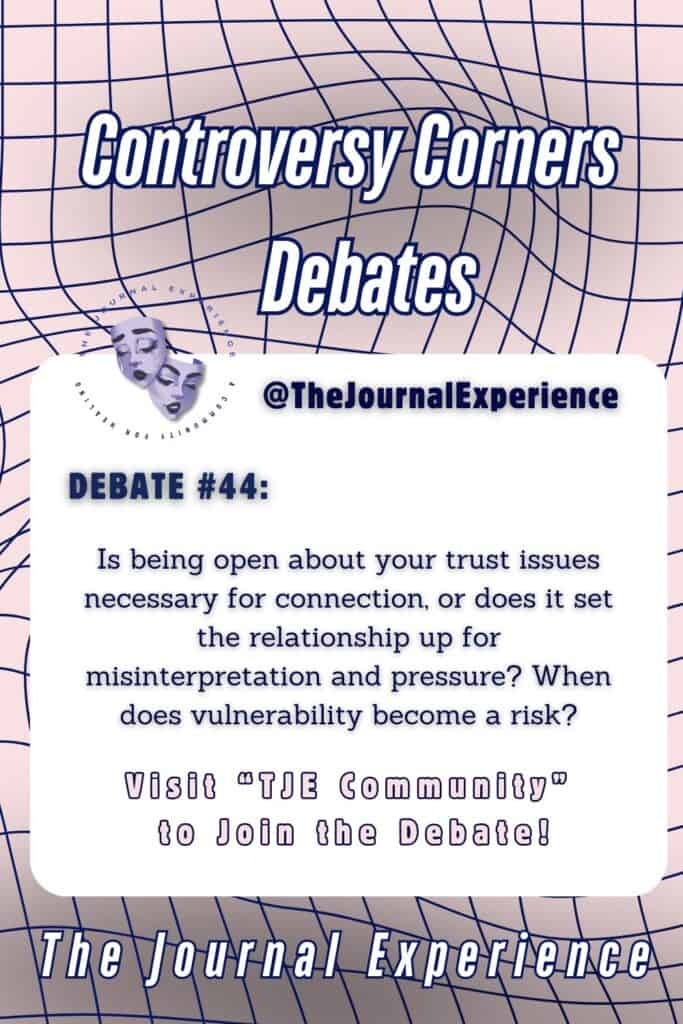
Tips for Using These Prompts Effectively
How you use these prompts matters just as much as what you write. Journaling for trust healing isn’t about perfect answers—it’s about creating emotional safety through honesty, repetition, and self-compassion.
Write Without Judgment
Your journal is not a courtroom where your emotions are put on trial. Let yourself be honest without correcting, minimizing, or justifying your fears. Even when your thoughts feel “messy,” contradictory, or uncomfortable, they deserve space to exist. Healing begins when you stop arguing with what you feel and start listening to it instead.
Use Them Consistently
You don’t need to journal every day to experience growth. Even 5–10 minutes a few times a week is enough to build emotional momentum and rewire safety into your system. Consistency matters more than intensity. The more your nervous system associates journaling with calm and clarity, the safer it becomes to explore harder emotions over time.
Return to Past Answers to Track Growth
Re-reading your reflections allows you to see emotional patterns, breakthroughs, and healing that you may not notice in the moment. What once felt overwhelming may now feel manageable. Returning to your old words shows you tangible proof that trust is slowly rebuilding—both with others and with yourself.
Create a Safe Environment to Write
Where you journal matters. Try to choose a space where your body feels calm—soft lighting, quiet music, or a familiar setting can help your nervous system relax. When your body feels safe, your mind becomes more willing to open up.
Stop When You Feel Emotionally Flooded
You don’t have to push through every prompt in one sitting. If you feel overwhelmed, pause. Healing doesn’t require forcing your nervous system past its limits. Sometimes the most powerful thing you can do is close your journal, take a breath, and return when your body feels grounded again.
Journal Prompts for Boundaries
These prompts help bridge trust, safety, and self-protection.
- What boundaries do I currently struggle to enforce?
- Where do I abandon myself to keep the peace?
- What behaviors instantly make me feel unsafe?
- Where do I ignore red flags because of attachment?
- What does self-protection look like without emotional shutdown?
- What do I need in order to feel emotionally secure moving forward?
Overview
Healing trust issues is slow, layered work. Some days you’ll feel empowered. Other days fear will resurface. That doesn’t mean you’re failing—it means your nervous system is learning a new language of safety.
These 25 journal prompts for trust issues exist to give you a private place to feel, explore, release, rebuild, and redefine what trust looks like when it’s rooted in self-protection and emotional truth—not survival anxiety.
Journaling becomes the bridge between who you were when you were hurting and who you are becoming as you heal.
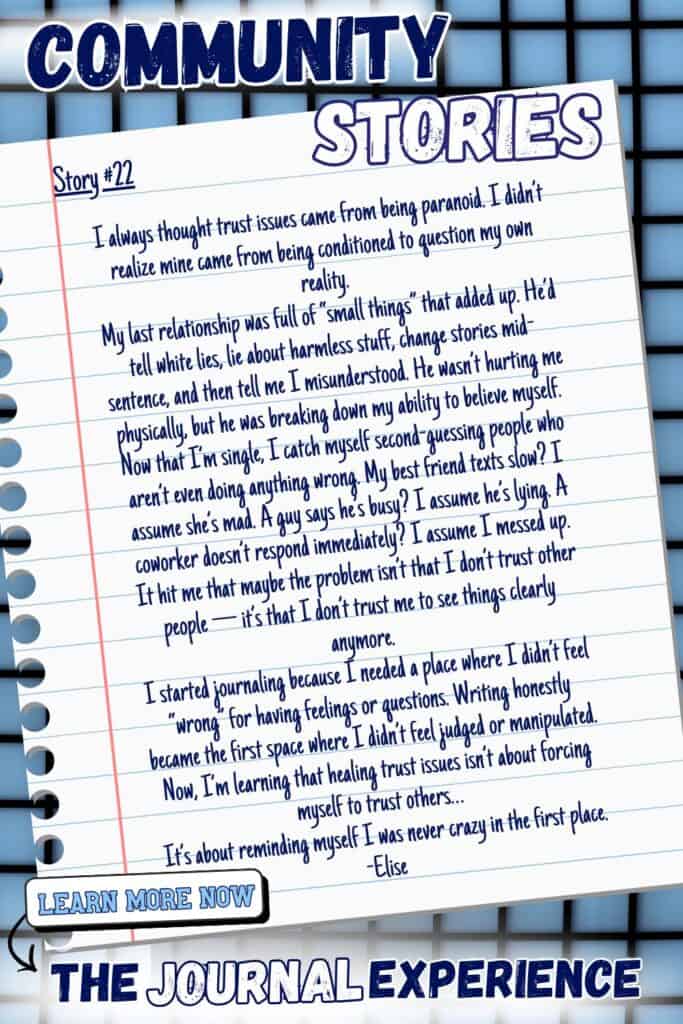
If you’re ready to deepen this work, The Journal Experience is here to hold space for your process through guided prompts, community reflection, and trauma-informed healing conversations. Subscribe to stay connected to tools that support your emotional safety without rushing your growth.
You don’t need to force trust. You just need to feel safe again.