Emotional abuse rarely looks the way people expect it to. It doesn’t always involve shouting, insults, or obvious cruelty—it often hides in subtle patterns that slowly erode your sense of safety, confidence, and self-trust. Many people experiencing emotional abuse don’t realize what’s happening because the behaviors feel confusing, inconsistent, or even loving at times.
This post is about using journaling as a powerful tool to uncover those patterns, bring clarity to your experiences, and help you recognize emotional abuse without minimizing what you’ve been through.
Why Emotional Abuse Is Hard to Recognize
Emotional abuse is difficult to identify because it doesn’t happen all at once. It often unfolds slowly, weaving itself into daily interactions in ways that feel normal over time. When harmful behaviors are mixed with affection, apologies, or moments of connection, it becomes harder to trust your own perception. Many survivors spend years questioning themselves rather than questioning the behavior.
Confusion and Mixed Messages
Emotional abuse thrives in inconsistency. One moment you may feel deeply cared for, and the next you’re confused, dismissed, or blamed. These mixed messages create emotional whiplash, making it hard to label the behavior as harmful. Over time, this confusion can lead you to doubt your instincts and accept treatment that doesn’t feel right.
Hope and Idealization
Hope plays a powerful role in emotional abuse. You may cling to the idea of who the person can be rather than who they consistently show themselves to be. Emotional abusers often reinforce this hope by offering brief periods of affection or change, keeping you emotionally invested. This idealization can make it difficult to confront the reality of the harm being done.
Gradual Escalation of Unhealthy Behavior
Emotional abuse often escalates slowly enough that it feels normal by the time it becomes severe. Boundaries are crossed in small ways, criticism becomes more frequent, and emotional safety erodes gradually. Because there’s no clear starting point, many survivors struggle to pinpoint when things “went wrong.” Journaling helps capture these shifts over time.
How Writing Helps You Identify Emotional Abuse
Writing creates space between your emotions and the events themselves. Instead of reacting in the moment or rationalizing behavior later, journaling allows you to slow down and observe what’s actually happening. It gives you a private place where you don’t have to explain, justify, or minimize your experience. Over time, patterns begin to reveal themselves with clarity.
Seeing Behavior More Objectively
When experiences are written down, they become harder to dismiss. Journaling turns vague discomfort into concrete examples of behavior. Reading your own words back can help you see interactions more clearly, without the emotional fog that often accompanies manipulation or gaslighting. This objectivity is crucial for recognizing emotional abuse.
Noticing Repetitive Patterns
One incident may be confusing, but repeated incidents tell a story. Journaling allows you to notice cycles—apologies followed by the same behavior, affection followed by withdrawal, or promises that never lead to change. Recognizing repetition helps shift the focus from “What did I do wrong?” to “Why does this keep happening?”
Getting Clarity on Emotional Safety
Emotional safety is often easier to feel than to explain. Journaling helps you name when you feel anxious, silenced, guarded, or emotionally small around someone. These emotional cues are powerful indicators of unhealthy dynamics. Writing helps validate what your body and nervous system already know.
30 Journal Prompts for Recognizing Emotional Abuse
These prompts are designed to gently guide you toward clarity, not force conclusions. Take your time with them—there is no right or wrong answer. What matters is honesty, self-compassion, and curiosity about your experience.
Prompts for Noticing Behaviors
- How does this person respond when I express discomfort or hurt?
- Do I feel heard, dismissed, or blamed during conflicts?
- What patterns do I notice in how disagreements begin and end?
- How often do apologies come without lasting change?
- Are my boundaries respected consistently, or only sometimes?
- How does this person react when I say “no”?
- Do I feel pressure to explain or justify my feelings?
- What behaviors make me feel anxious or on edge around them?
Prompts for Emotional Clarity
- How do I feel after interactions with this person—energized or drained?
- What emotions do I suppress to keep the peace?
- Do I feel emotionally safe expressing my true thoughts?
- How often do I second-guess my feelings after talking to them?
- What emotions show up in my body when I think about this relationship?
- Do I feel more confident or more insecure over time?
- What feelings do I struggle to name, and why?
Prompts for Rebuilding Self-Trust
- When have my instincts warned me that something wasn’t right?
- What signs did I notice early on that I later ignored?
- How do I typically talk myself out of my concerns?
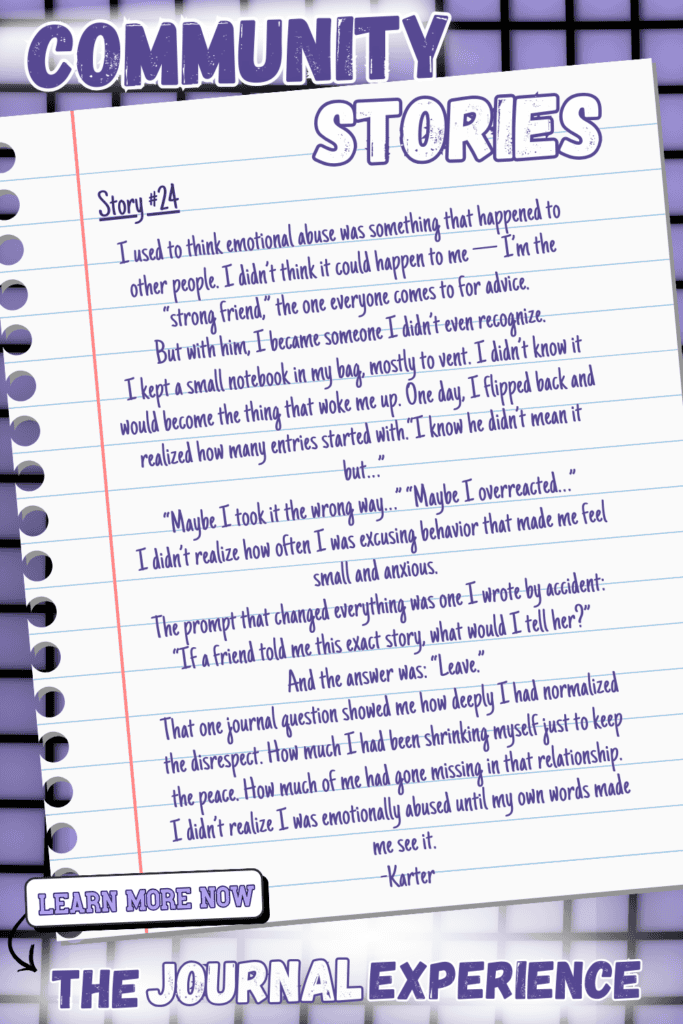
- What would I say to a friend experiencing this?
- What truths feel uncomfortable but honest?
- How has self-doubt been reinforced in this relationship?
- What does my intuition keep repeating?
Prompts for Recognizing Manipulation
- Do I feel responsible for managing this person’s emotions?
- How often do conversations end with me apologizing?
- Have my words ever been twisted or used against me?
- Do I feel guilty for having needs?
- How does power show up in this relationship?
- Do I feel controlled through silence, affection, or withdrawal?
- Are my reactions labeled as “too sensitive” or “dramatic”?
- What patterns emerge when I look at these answers as a whole?
How Journaling Strengthens Awareness and Intuition
As you write consistently, something important happens—you begin trusting yourself again. Journaling reconnects you with your inner voice, especially if it’s been silenced or dismissed. It helps separate truth from wishful thinking and clarity from emotional confusion. Over time, awareness becomes instinctual rather than forced.
Understanding Emotional Reactions
Your emotional responses are information, not weaknesses. Journaling helps decode why certain interactions leave you feeling anxious, ashamed, or small. These reactions often signal emotional harm long before the mind can articulate it. Writing gives those signals meaning.
Reconnecting With Intuition
Emotional abuse often disconnects people from their intuition. Journaling helps rebuild that connection by validating your lived experience. When you consistently honor what you feel on the page, intuition becomes clearer and louder. This clarity is a powerful form of self-protection.
Seeing Truth Instead of Wanting Potential
One of the hardest parts of emotional abuse is letting go of potential. Journaling gently shifts your focus from what could be to what is. Seeing the truth on paper helps release denial without shame. Clarity becomes an act of self-respect.
Next Steps When Writing Reveals Concerning Patterns
Recognizing emotional abuse can bring relief, grief, anger, or confusion—all at once. Journaling doesn’t mean you have to make immediate decisions. It simply means you’re honoring reality instead of avoiding it. The next steps are about support, validation, and safety.
Self-Validation
Your experience doesn’t need external approval to be real. What you uncover through journaling is valid, even if others don’t understand it. Self-validation helps counter years of minimization and self-doubt. Trusting your truth is a powerful first step.
Seeking Support
You don’t have to process this alone. Whether it’s a therapist, support group, or trusted person, outside perspective can help ground your insights. Support doesn’t mean weakness—it means you’re choosing care. Journaling can help you articulate what support you need.
Creating Emotional Distance
Sometimes clarity leads to boundaries, distance, or reevaluating access. Emotional distance doesn’t always mean leaving immediately—it can start internally. Journaling helps you reclaim emotional space and prioritize safety. You’re allowed to protect your peace.
Overview
Recognizing emotional abuse is not about assigning blame—it’s about reclaiming clarity. Journaling gives you a safe place to see patterns honestly, without pressure or judgment. What you uncover on the page matters, even if it challenges what you hoped was true. By honoring your journaling insights, you take an essential step toward emotional awareness, self-trust, and healing.
If journaling helped you see something clearly today, you don’t have to stop here.
The Journal Experience newsletter is a quiet, grounding space for people unpacking toxic relationship dynamics, rebuilding self-trust, and learning how to name what they’ve lived through—without shame or pressure. Each email offers reflections, writing prompts, and insight designed to help you continue developing emotional awareness and clarity at your own pace. If this post resonated, subscribing is a gentle next step toward staying connected to your healing.